Skip to content

I’ve got a mate who always knows which restaurants are about to explode before anyone else has even heard of them.
Not in a vague, “I heard this place is good” sort of way. I mean specifics.
“This chef just left a Michelin kitchen.”
“They’re sourcing from this tiny farm upstate.”
“Go now, the line will wrap around the block by noon.”
And every single time I listen to him, I end up feeling like I’ve cheated the system a bit.
That’s the magic of having someone on the inside.
And in our world — power, furniture, the spaces where people actually live and work — we get that same kind of early access. We see what brands are doing before it becomes mainstream. We see what’s being installed in offices, universities, airports, and hotels before it hits your Instagram feed.
So consider this your inside scoop.
You won’t find any fluff or trend-chasing. Just six current brands doing genuinely interesting, forward-thinking work; the kind that quietly shapes how spaces feel, function, and perform.
And they’re worth paying attention to.
Turf Design: making sound visible (and beautiful)
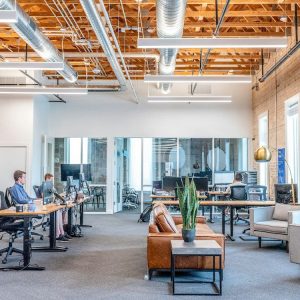
Open-plan offices sounded like a brilliant idea…until everyone actually tried to work in one.
Noise is one of the biggest hidden productivity killers in modern spaces, as we explored in our blog post on why beautiful workspaces often fail in practice.
Enter: Turf Design.
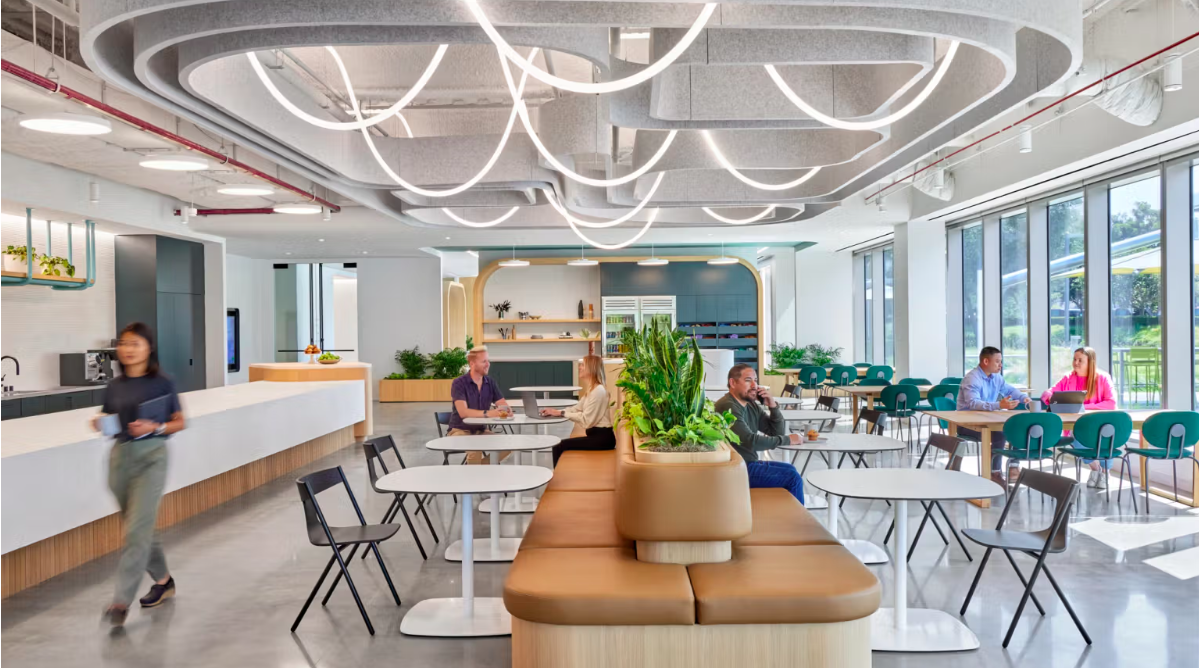
They create acoustic solutions that don’t just absorb sound, they turn it into a design feature.
Think:
Sculptural wall panels
Ceiling installations that double as art
Materials that are Red List-free, meaning no harmful chemicals flagged by the Living Building Challenge
Certifications from the U.S. Green Building Council
So instead of hiding acoustics behind bland grey panels (you know the ones), they elevate it into something visual and expressive.
From our perspective, it’s a perfect pairing: great acoustics + intelligently placed power = spaces that actually work.
Created Hardwood: where nature meets precision
There’s something so calming about real wood.
Not laminate pretending to be wood. Not “oak effect.” Actual, irregular, slightly imperfect, unapologetically natural wood.
That’s exactly what Created Hardwood leans into.
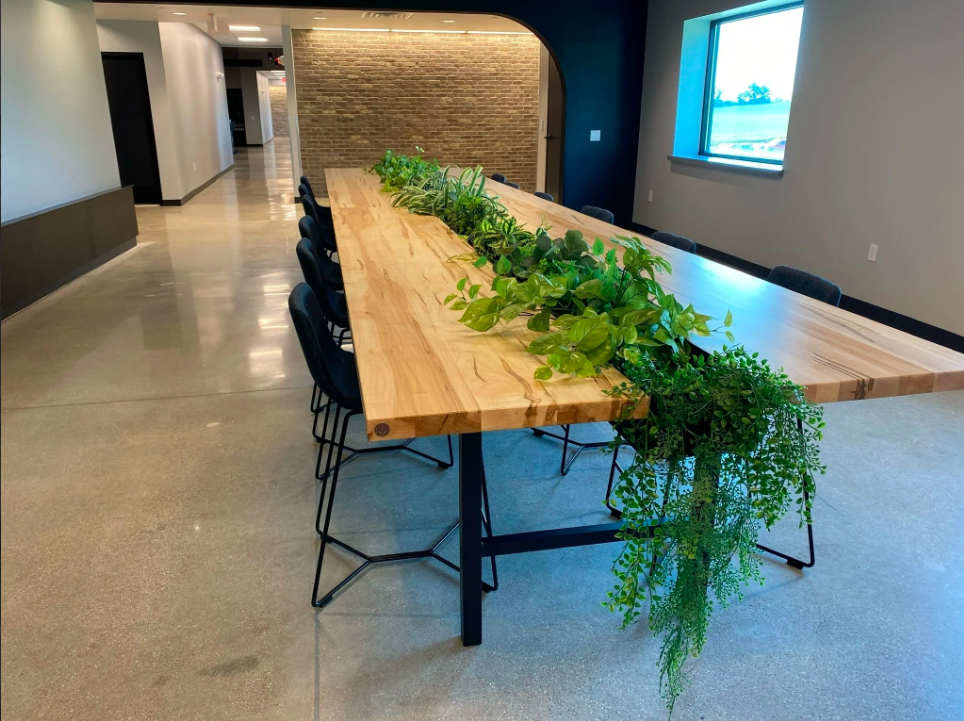
They take responsibly sourced trees, often slabs most manufacturers would reject for being too “characterful”, and they turn them into one-of-a-kind furniture pieces.
Every knot, curve, and grain pattern becomes part of the story.
We love that this aligns with growing evidence that natural materials in built environments can reduce stress and improve cognitive function. (Like this meta-analysis that found exposure to natural environments had a medium to large effect on both increasing positive affect and decreasing negative affect.)
So this isn’t just aesthetic. It’s physiological.
We’ve worked with Created Hardwood directly, integrating power into their live-edge tables. Which, if you think about it, is quite a lovely metaphor, really: raw nature meeting clean, engineered energy.
It’s the kind of piece that doesn’t just fill a room, it anchors it.
Hightower Group: doing the right thing (and proving it)
There are plenty of brands that say they care about sustainability.
…Fewer that open the books and show you everything.
Hightower Group is one of those few.
They’re a family-founded, women-owned, certified B Corp, which means they’ve met rigorous standards for social and environmental performance. (And yes, that certification is independently verified, not a marketing badge…which is a sigh of relief for our vigilant stance on greenwashing.)
But what really stands out is their commitment to material health and transparency.
They actively assess what goes into their products, aiming to eliminate harmful substances where possible, and being honest where it’s not (because, as we all know, perfection isn’t always realistic in manufacturing).
That level of transparency is rare.
And they go further, too…
1% of their higher education project revenue is redistributed to employees and their families for continued education. Which is such a cool idea that comes full circle — the spaces they furnish build for learning also invest in the people behind them.
At OE, sustainability isn’t a side project either, it’s baked into how we design and manufacture (see what we’re doing here). So when we see companies like Hightower pushing the same agenda, it feels less like a trend and more like a movement gathering pace.
MeSpace (Hollman): designing for the brain, not just the body
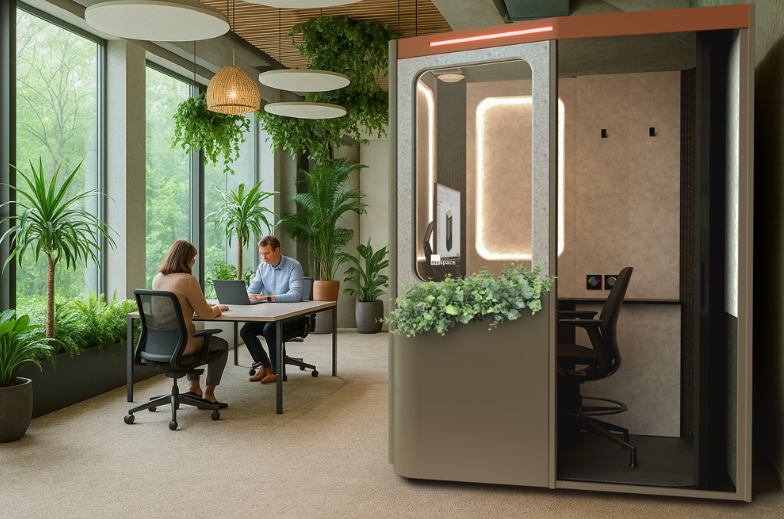
Most spaces are designed for how they look, not how they feel.
MeSpace, a division of Hollman Inc., flips that completely.
They create immersive pods and environments rooted in neuroarchitecture: the science of how built spaces affect brain function, mood, and performance.
We’re talking:
Acoustic control
Sensory modulation
Spatial awareness
Psychological safety
All engineered into a single environment.
This matters because thoughtfully designed environments can significantly impact focus, stress levels, and productivity, especially for neurodiverse individuals. (Read more on designing workspaces for neurodiverse teams.)
MeSpace’s philosophy says it best:
“When you design for the edges, you create better spaces for everyone.”
We completely agree.
Also worth noting, Hollman isn’t new to high-performance environments. They’ve designed locker rooms for teams like the Chicago Bears. So they understand pressure, performance, and precision.
MeSpace just brings that thinking into everyday work and learning environments, and it feels like a breath of fresh air for everyone who wants spaces that match how their brains work.
Haskell Education: designing for real humans (finally)
If you’ve ever sat in a classroom chair that felt like it was designed for someone else entirely, you’re not alone.
Traditional education furniture has been, frankly, a bit one-size-fits-none.
Haskell Education is fixing that.
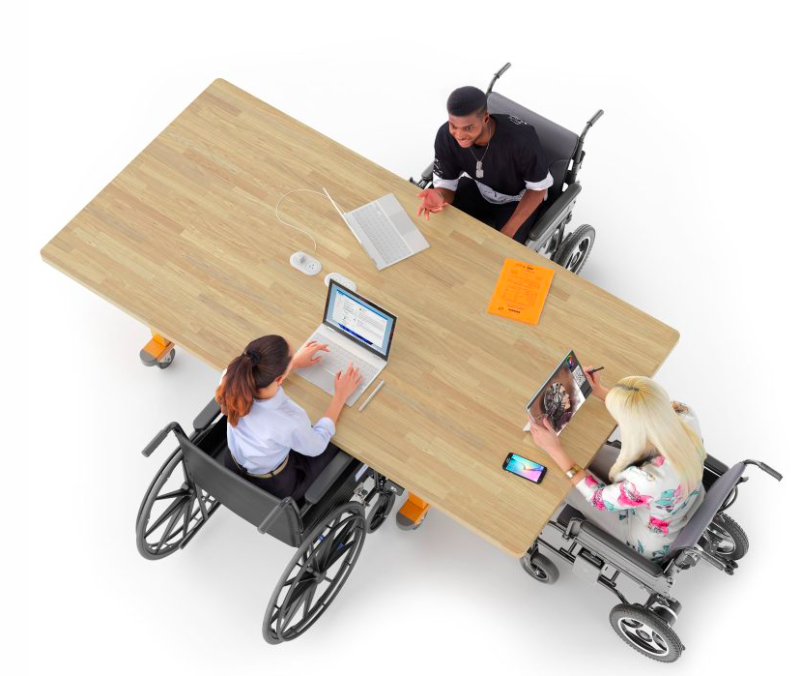
They’re building ADA-compliant, height-adjustable tables with integrated battery power, meaning students can raise or lower their workspace and plug in devices without being tethered to a wall.
…That last bit matters more than it sounds.
Because once you remove fixed power points, you unlock flexible layouts. And flexible layouts lead to better collaboration, accessibility, and engagement.
In other words: the desk you sit at can improve how you think.
And from our side at OE Electrics, cordless and modular power is something we’re deeply invested in. Spaces should adapt to people, not the other way around.
Haskell exemplifies that in a big way.
muzo: the classroom just got an update
This one feels a bit like stepping into the future.
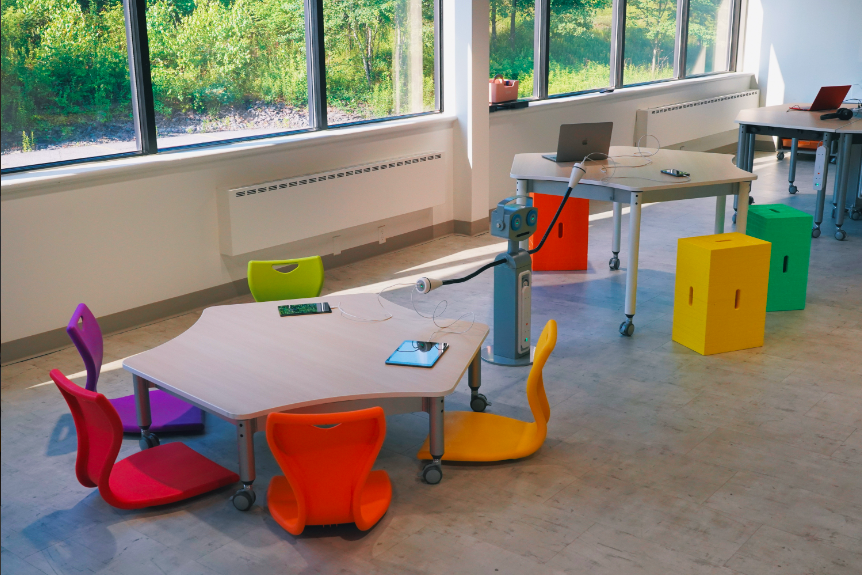
muzo is blending physical furniture with digital intelligence to support K–12 learning in a completely new way.
Their standout concept, Juicebot, acts as an interactive classroom assistant that can:
Translate lessons into different languages
Break down complex topics into simpler explanations
Adapt to different learning styles
And this isn’t just “nice to have”…
The National Center for Education Statistics reports that multilingual learners make up over 10% of U.S. public school students, a number that continues to grow.
Tools like Juicebot, that adapt to the needs of learners in real time, aren’t just clever. They’re necessary.
What’s fascinating here is the convergence: furniture, power, and software all working together to achieve a common goal.
So what’s the big picture?
If you zoom out, a pattern emerges:
Furniture is becoming smarter
Spaces are becoming more human-centered
Sustainability is becoming expected
And power is quietly sitting at the center of it all
Every one of these brands is solving a different piece of the same puzzle:
How do we design spaces that actually support the way people live, learn, and work today?
And from where we sit — building the infrastructure that keeps those spaces powered — the shift is impossible to ignore.
You’ve probably already used products from companies like these, in an office, airport lounge, hotel lobby, university campus, etc.
…You just didn’t know whose thinking was behind it.
Now you do. 😎
And remember, when a space feels effortless, it’s not luck. It’s good design…with a bit of power behind it.